
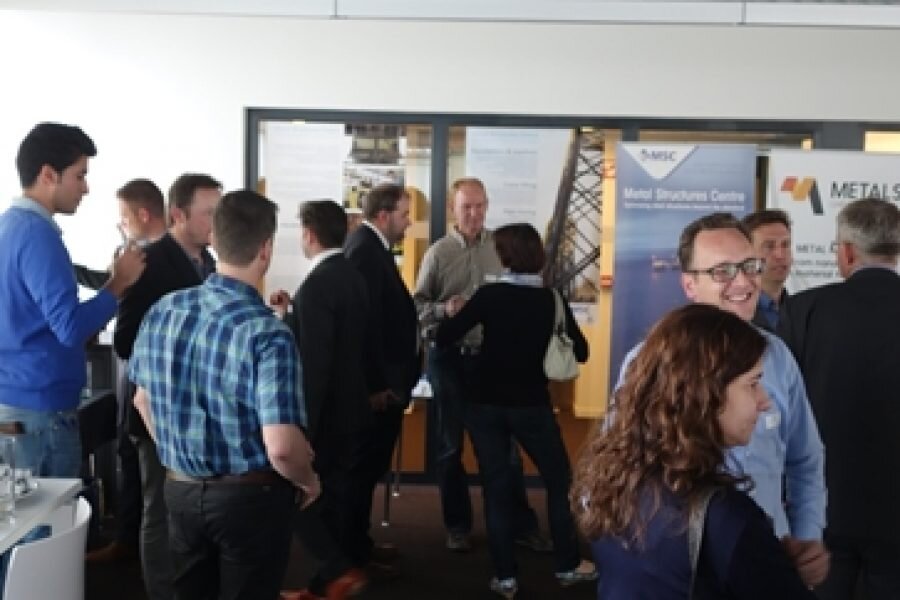
The Metal Structures Centre - a consortium of OCAS, the Belgium Welding Institute and Soete's lab of Ghent University - hosted and organised, together with Tacon, a seminar on the benefits of Engineering Critical Assessment (ECA) on May 19th.

Sometimes, cracks or defects are detected in a metal structure during industrial operations. The aim of ECA is to evaluate detected or assumed defects. Consequences of such assessments can be to request for a specific inspection interval, an immediate repair, a limitation of the loads or on the opposite to relax the inspection or loading constraints, or to extend the life of the components.
During this seminar technical people from within the industry shared their experiences with participants from various industrial sectors. The practical showcases presented evoked interesting discussions proving the importance of structural integrity for the industry.
Seminar highlights
P-J. Provoost from the Carbon Energy Club opened the seminar with a presentation on the impact of unforeseen process downtime and the shift in focus from CAPEX to OPEX.
F. Petit from Engie (Laborelec) involved in assessing the structural integrity of different power plant components such as pipes, valve casings and steam turbines presented a study concerning a weld defect in a high pressure boiler drum of a combined cycle gas turbine power plant.
P. Roovers from Fluxys, currently responsible for the PIMS (pipeline integrity management system) and integrity issues detected by ILI (in-line inspection) and acting assistant secretary general to the EPRG (European Pipeline Research Group) is involved in standardization activities in CEN for gas transmission in general and SMS (safety management system) PIMS in particular. He talked about an extensive experimental programme which led to the development and validation of ECA rules and their applicability criteria for the assessment of corrosion in girth welds. The derived workmanship criterion enables significant cost-savings.
S. Droessaert described the management system he developed to inspect overhead cranes showing fatigue cracks at ArcelorMittal Gent.
A. Krom and O. Huising from Gasunie explained a case on welding ends of cast steel plug valves suffering from multiple defects.
The importance of residual stresses on the structural integrity assessment of offshore wind monopole structures was presented by A. Mehmanparast from Cranfield University.
W. De Waele from Soete Laboratory of Ghent University, partner of the Metal Structures Centre, stressed the importance of accurate material input data to obtain reliable output from an ECA. This final presentation highlighted the expertise of the Metal Structures Centre regarding the characterization of material properties, and the resulting merits with respect to ECA. Focus was on standardized and innovative, advanced characterization techniques.
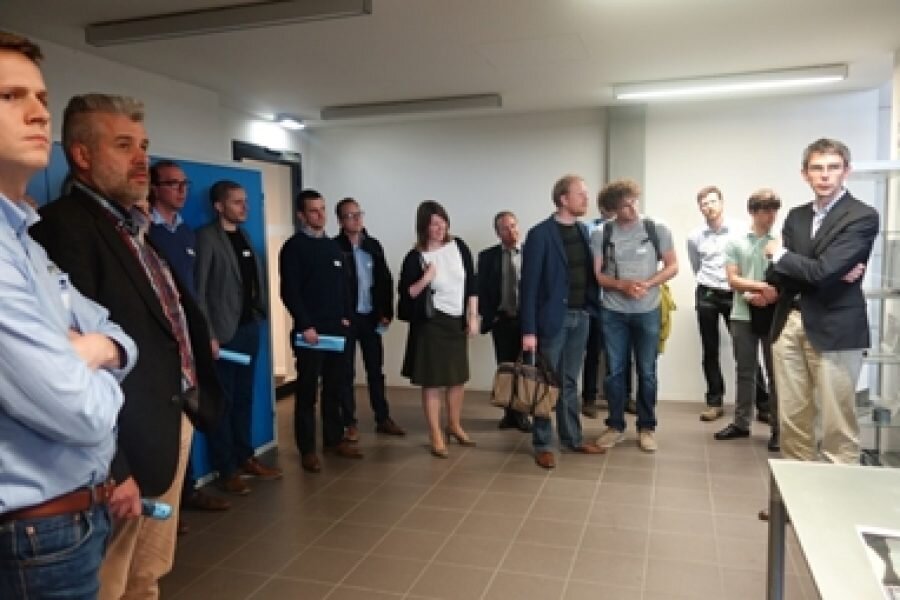
Metal Structures Centre lab tour
Following each session, fruitful discussions between participants, presenters and organisers revealed the interest for ECA from different industrial sectors. Topics included the economical benefit of the different methods, the necessity of testing in representative conditions, workmanship versus assessment, etc.
The participants were also invited to a lab tour of the Metal Structures Centre facilities.
The Metal Structures Centre provides its worldwide customers with its competencies on design, use and evaluation of the behaviour of steel structures. The Metal Structures Centre combines the strength and skills of three independent research and development labs – OCAS, Belgian Welding Institute, and the Soete Laboratory of Ghent University, – working in the field of pipelines, plates, steel structures and machine components.
